Darkness changes the food story.
Compare a sunlit reef, a deep coral garden, and a vent community. Which energy routes could support each?

From the largest travelers to the smallest drifters.
One extraordinary ocean. All the way down.

Sunlight spills across a reef built by tiny animals.
Look closer. Almost every surface is alive.

Pause the descent. Change your sense of scale.
There is an extraordinary world hiding in the water.
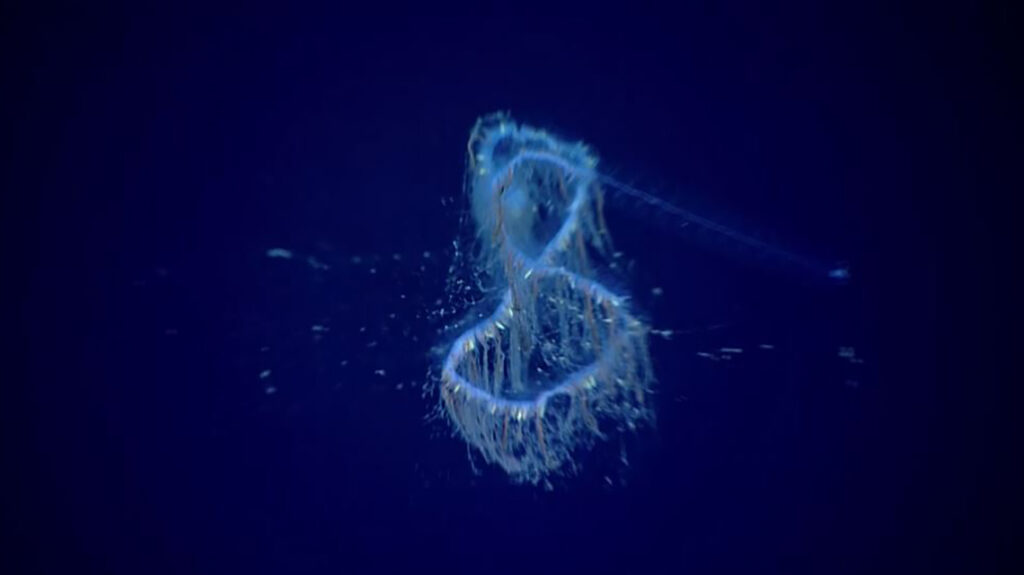
At the edge of daylight, a delicate colony drifts.
Many connected lives, moving as one.
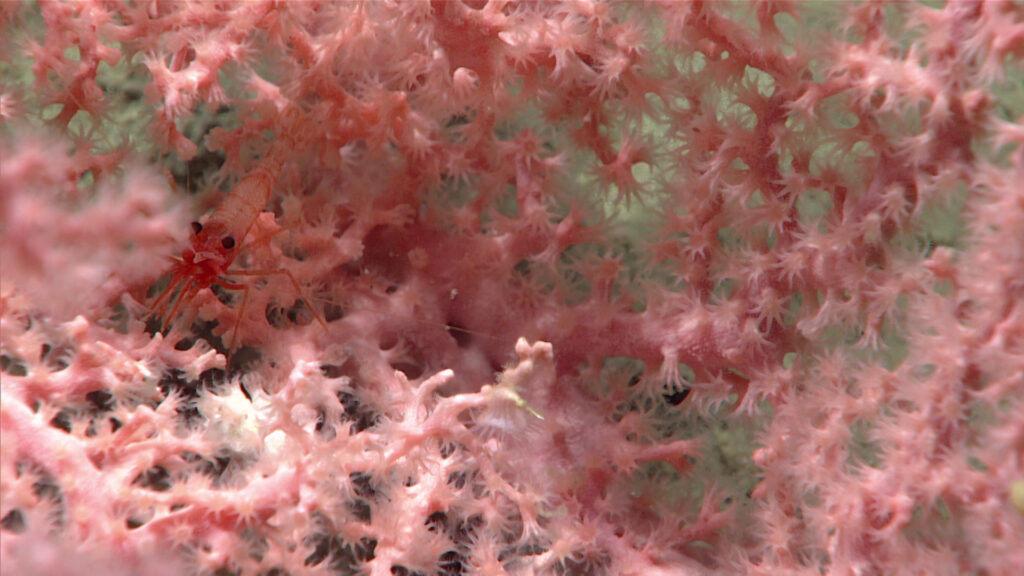
Far below sunlight, corals still make a home.
A different kind of garden. The same capacity for wonder.

There is no daylight here.
Yet life is delicate, intricate, and astonishing.

In the darkness, chemistry becomes a source of food.
Life gathers where warm fluids emerge from Earth.

Here, pressure is hundreds of times greater than at the surface.
Even fish have reached this extraordinary depth.
From sunlight to Challenger Deep.
An entire world connected by water, energy, and life.
You’ve reached the deepest ocean.
Keep your curiosity.
Life needs an energy source. Sunlight supports photosynthesis near the surface. Food can travel into darkness, and chemical reactions support food production at hydrothermal vents.
Compare a sunlit reef, a deep coral garden, and a vent community. Which energy routes could support each?
Image zoom enlarges details. Depth describes a place in the water. Our plankton montage has no shared physical scale.
Check the observation, depth, and source. Expedition footage is evidence; generated environments are illustrations.
There is no sunlight and no known nearby vent. Food particles arrive on currents. Explain how animals could live here, and name one measurement you would collect to investigate.
Separate where an animal lives from where its food was originally produced. What could currents carry?
Particles delivered by currents can feed these corals even though photosynthesis cannot happen locally. Measure particle supply or feeding activity to investigate. The lack of a known vent does not prove that all possible chemical energy sources are absent. Revise your explanation, then try a different habitat in the depth lab.
Notes and progress disappear when this page is reloaded.
Audience: ages 10+ with independent reading, families, and adult learners. No prerequisites. Allow 10–15 minutes, or 20 minutes with discussion.
Outcomes: explain how light and pressure change with depth; distinguish three routes that support ocean food webs; use an observation and its source to justify an explanation for deep-sea life.
Suggested path: predict in the Depth lab → compare Reef, Deep coral, and Vents → inspect a real specimen → complete the 1,400 m coral challenge. Optional discussion: “What evidence would change your explanation?”
Model boundaries: light zones are broad educational categories; real conditions vary. Pressure uses approximately 1 + depth ÷ 10 atmospheres. The food switches describe possible supply, not measured abundance or survival. This combines different habitats and locations; it is not a geographic transect.
Teaching hypothesis: changing depth and tracing food routes may help learners explain why darkness does not mean lifelessness. Learning effectiveness has not yet been tested.